


I was chatting with a coaching client last week, who only one month after being laid off, has already signed up for two courses: one language immersion, one photography.
Even better, they’re both in person, and happening in two different countries - neither of which she lives in.
I told her it sounded like she had created her own semester abroad.
She’s treating her severance period as an opportunity for learning. She’s not only using the money from her package but the newfound gift of time, and applying her curiosity in the best possible way.
What I love most about this plan is that none of this is necessarily about monetizing new skills or figuring out her next career move. She’s pursuing things that interest her, building skills around her personal passions and pursuing a sense of her own fulfillment. She’s putting herself first, letting one of her core values - her love of learning - guide her.
Her story got me thinking about all the pressure we put on ourselves in September, and gave me a great excuse to write this newsletter about something other than the smell of newly sharpened pencils.
What if we could create our own “semester abroad?”
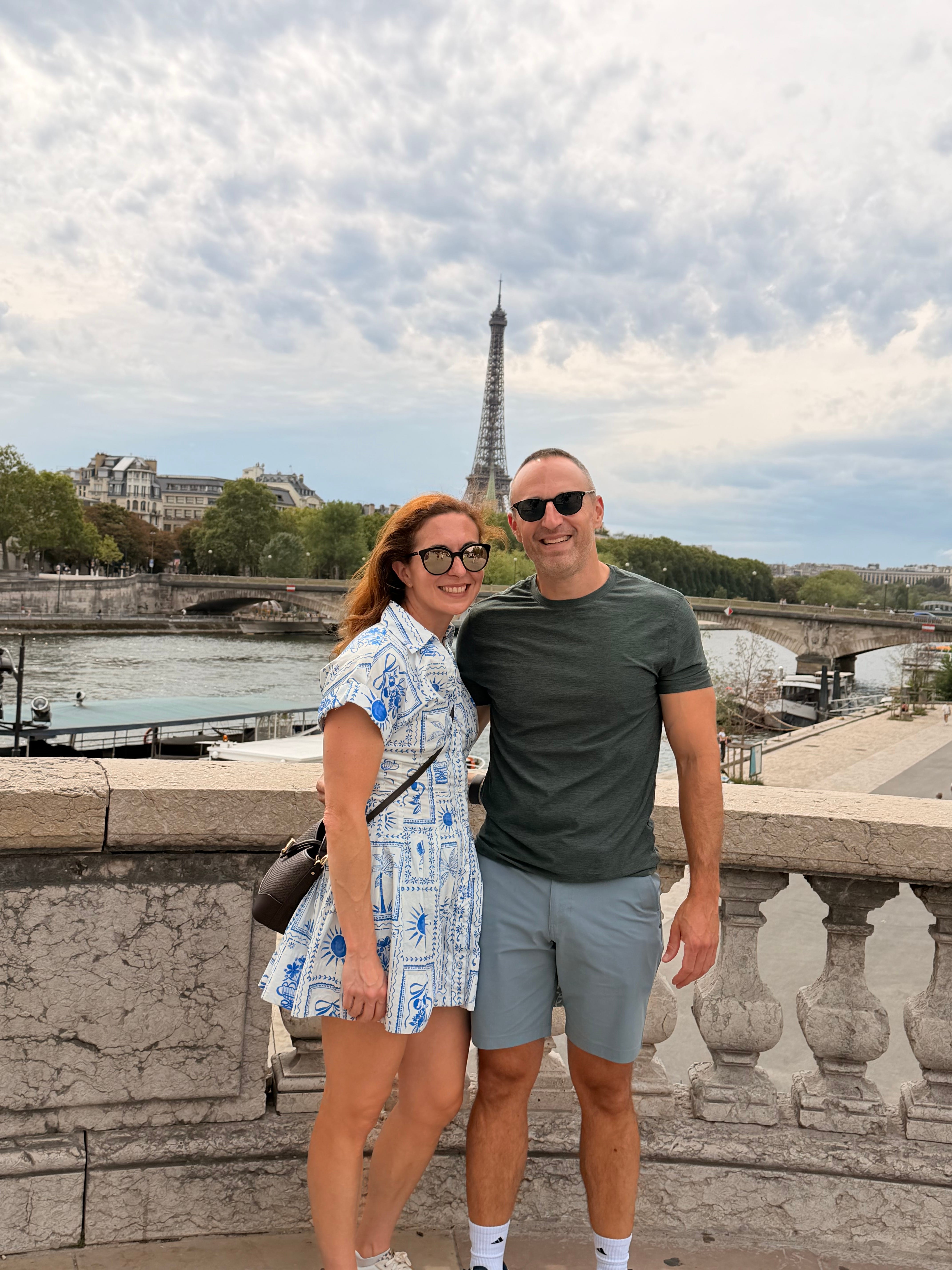
Most of us don’t have the budget or the flexibility to spend a few months taking classes in another country. I have a child in grade school so that’s certainly not happening for me anytime soon.
But there have to be ways to cultivate my own love of learning as we flip the calendar to another school year.
Katy Milkman, the author of How to Change, came up with the concept of the “fresh start effect:”
Her research found that:
People were about 33% more likely to exercise at the start of a new week,
About 50% more likely to exercise at the start of a new semester
Gym attendance showed an 82% increase at the beginning of a new year versus the end of the previous one
A new year, a new week (SUNDAY SETUP, anyone?) a new season, a new semester.
We love a reason to start.
“Humanity has long been captivated by the promise of new beginnings,” says Milkman. “From ancient rituals marking the harvest cycle to modern-day New Year’s resolutions…certain moments carry disproportionate power to catalyze change.”
Except, for myself, and many parents, September is about survival.
I remember how tough last year’s transition back to school was, so I’m intentionally keeping this month as light as possible. I’m hanging onto our already established routines, trying not to introduce too much that’s too new, noting what’s working, admitting what’s not, and looking for opportunities to adjust as we go.
Professionally, I’ve been spending most of my time focused on my coaching clients. My roster is so full this season I’ve pushed several folks to start a month or two later than they originally wanted. I need to preserve the work I already have and make sure I can deliver before I take on anything new.
Remember: maintenance is a very ambitious goal.
I’ve also been loving the From Setbacks to Setups salons I’ve been hosting, with quite a few more coming up this fall. That’s another place where I’m choosing to focus my time and energy.
Still, I dream of finally taking that behavioral science course, getting my fitness instructor certification, finally investing in a writing retreat, or starting that historical fiction novel I’m so reluctant to write.
Right now my answer is clear: not yet.
But maybe having a “semester abroad” doesn’t require signing up for anything specific.
Inspired by my client, I’m looking to this fall as a season of learning, reuniting with friends back in town after a summer away, organizing more gatherings, planning moms nights out, date nights, morning coffees, walks and more.
And I’m going into all of it with my radar tuned to one question:
What can I learn this semester?
I don’t need to know the answer yet. I just need to remain an “open bowl” so that when an opportunity, idea or new interest comes along, I’m ready to receive it.

So this week’s action isn’t to ask what you’re signing up for this September.
Instead, ask yourself: What do I want to be open to this semester?
Maybe your fall semester goal, like me, is simply to survive the transition. Maybe it’s prioritizing rest. Going on walks with friends. Meditating. Doing morning pages. Finally starting something you’ve been talking about forever.
With four months left of the year, what do you want to be proud of for having done this season?
I’m not sure what mine is yet. Maybe it’s several of these things. Maybe it’s just one.
For now, I’m just keeping the bowl open and seeing what lands.
In the meantime, here’s what I’m:

The optimism of booksellers who refute the article that I shared awhile back about “the end of reading” and the idea that we are living in a post-literate society (shudder.)
Their counterargument: “new bookstores keep opening at a rate that defies the end-of-reading narrative. According to the American Booksellers Association’s annual report at the end of 2025, 605 bookstore businesses opened last year, compared to just 65 that closed. The number of new stores is up 87 percent from the same metric in 2024.”
Bookselling is notoriously difficult, so that kind of growth suggests something encouraging: there is still plenty of energy around books, reading and the communal spaces built around them.

This man who has existed for the past few decades without ever owning a smartphone.
His friend writes, “Perhaps those of us who cannot or will not surrender our phones, despite longing to, are asking the wrong question. Not: How do I spend less time on my phone? But: What do I want to pay more attention to?”
(the first ten of you to click on that article won’t have to log in - it’s a gift link)

The AI apocalypse. We may or may not have a few more cans of food in the house now. (The electrical grid is my biggest worry, personally.) But our friend made a good point - if the apocalypse is imminent, your most valuable commodity is your relationships with those who live nearby. Go befriend your neighbors, folks.

The radical concept of asking for help. Angela Duckworth, the author of Grit (and the forthcoming Situated: Find the People and Places That Bring Out Your Best), wrote a New York Times Opinion piece about the illusion of self sufficiency and why the most successful people aren’t ashamed to ask for help.
“Being a successful self-starter doesn’t mean pulling yourself up by your bootstraps. It’s raising your hand and asking a teacher to explain, once again, a concept you still don’t understand. It’s calling up a former boss for advice. It’s announcing to your team that you’re stuck on an important problem and need their collective brain to solve it.”
Which feels particularly appropriate for a newsletter about going back to school.

Caroline Dell is Co-Founder and CEO of Goodword, a relationship management platform that helps founders and operators turn their network into their greatest asset. Before Goodword, she was a founding executive at Chief, helping scale the company from 200 to 20,000 members.
And thanks to her team for offering Sunday Setup readers a discount! Use code SUNDAYSETUP50 for $50 off your first year of Goodword.
Here’s how Caroline sets up her week.
1. What’s one daily or weekly routine that helps you to manage your time?
Every morning, I ask ChatGPT to turn my Linear tickets, Slack, and email into a CEO-level brief and task list. That feeds a two- to three-hour focus block, no meetings before noon, where I get my real work done. Everything else gets scheduled around it. When I’m drafting outreach in that window, I lean on Goodword to bring in real relationship context, so the message sounds like me and not a generic AI template.
2. What’s one small thing you do that restores you, gives you energy or carves out a small break in your busy week?
Walking my dog, Lily. She’s a three-year-old shelter mutt, part Australian Shepherd and part Chow Chow, and she has zero interest in my to-do list. Even one loop around the block resets my brain. Bonus points if we make it to the Brooklyn Heights Promenade, where I can stare at the Manhattan skyline and remind myself that if I can make it here, I can make it anywhere.
3. What’s one thing you’ve learned to say “no” to in order to protect your time?
I’ve learned to say no to reflexive coffee chats, the ones I say yes to out of guilt rather than real interest. I care about my relationships, but not every one needs a standing meeting to stay real. If a conversation consistently leaves me more drained than when I walked in, I find a lighter way to stay in touch, or I let it go.
4. What’s a habit you’ve recently dropped or added that made a noticeable difference?
I started observing Shabbat with my husband: one full day a week completely off my computer. No email, no Slack, no trying to solve anything. I come back on Sunday able to see the forest through the trees again, instead of just the branch I was stuck on. It once sounded impossible as a founder. Now it’s the time I protect most fiercely.
5. If you had one extra hour every week just for yourself, how would you use it?
I’d spend it reading, phone away, no productive purpose. I usually reach for fiction, but the one exception recently was Making It Without Losing It by Jess Ekstrom, which I picked up on a whim in an airport. It was one of those books that found me at exactly the right moment.
Here’s to a September of learning.
Until next time,
Amy
💪anytime abroad is good for fresh thoughts!
just so good. Thank you beautiful. Glad you’re back.